Multi-company ERP: managing several entities from one platform
The multi-entity problem
Growing businesses often end up with several legal entities — a holding company, an operating company, a trading subsidiary. Each entity may need its own books, its own tax reporting, and its own controls, yet they are run by the same people and use the same suppliers and customers.
Without a shared system, every entity becomes its own island: separate ledgers, separate master data, and separate reporting that someone has to stitch together at consolidation time. That duplication is expensive, and it's where errors creep in.
What multi-company ERP actually means
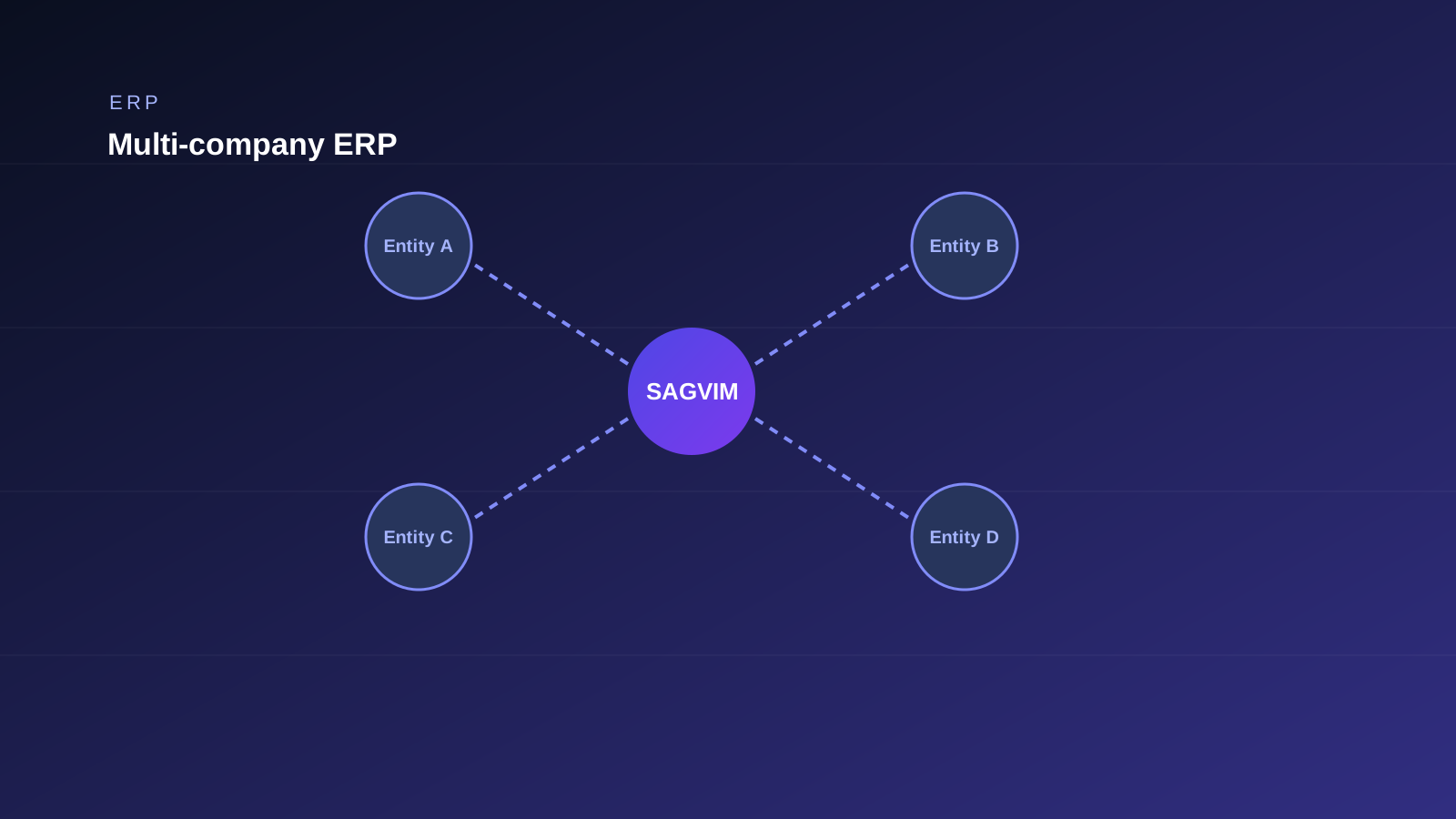
Multi-company ERP lets you run several entities from one platform. Each company keeps its own financial records and reporting, but they share the same system — and, where appropriate, the same master data and processes.
The practical benefits show up quickly:
- One set of users, roles, and permissions across all entities
- Shared customer and supplier data where it makes sense
- Each company's books stay separate and auditable
- Group-level visibility without rebuilding reports by hand
- No more re-entering the same transaction into multiple systems
What to look for in a multi-company platform
Not every ERP that claims multi-company support is equal. The distinctions that matter in practice:
- Separate ledgers per company, not just a tag on a shared ledger
- Company-level controls — who can see and change what, per entity
- Shared master data where it helps, with per-company flexibility where it doesn't
- Reporting that works at company level and across the group
- A platform that treats multi-company as a first-class design, not an afterthought
The SAGVIM view
SAGLINKS ERP is built around the realities of growing businesses, including groups that operate multiple companies and currencies. Multi-company support is one of its core finance capabilities, alongside multi-currency accounting and structured reporting.
If your entities currently run on separate spreadsheets and systems, a single platform is often the highest-leverage technology change available.