Inventory management essentials for growing distributors
The distributor's dilemma
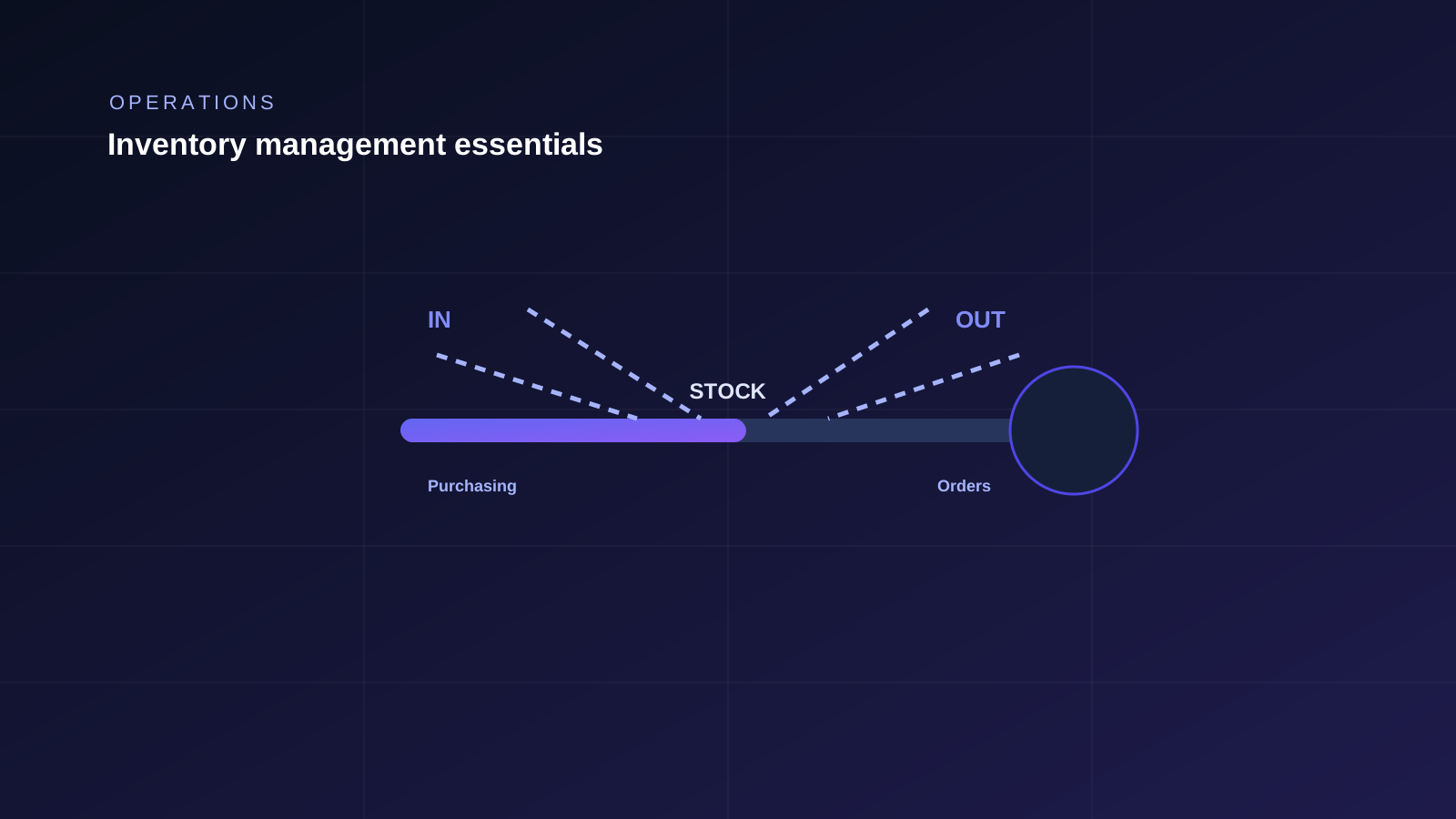
Distribution is a margin game played on two fronts: too little stock means lost orders and unhappy customers; too much means capital sitting on shelves and slow-moving lines eating margin. Growing distributors feel both pressures at once, and the tension only sharpens as volume grows.
The way out of the dilemma isn't a magic forecasting formula — it's visibility. You can't balance availability against overstock if nobody can reliably answer the question: what do we actually have?
The fundamentals that scale
Four fundamentals carry distributors from small to scale, and they all depend on data quality:
- Accurate stock records — what's on hand, what's committed, what's coming in
- Purchasing discipline — orders placed with visibility of real demand and supply
- Connected sales and finance — orders become invoices, stock movements become costs
- Periodic review — regular reporting on what's moving and what's not
Why disconnected tools fail at this
Spreadsheets and point tools can track stock in a small business, but they fail at the moment it matters most: when volume grows. The failure mode is familiar — sales sees one number, purchasing sees another, and finance sees a third. Each team makes decisions on a different version of reality.
That's the case for a single platform: one system where inventory, purchasing, sales, and finance share the same records. It doesn't guarantee perfect decisions, but it guarantees everyone is deciding on the same facts.
The SAGVIM view
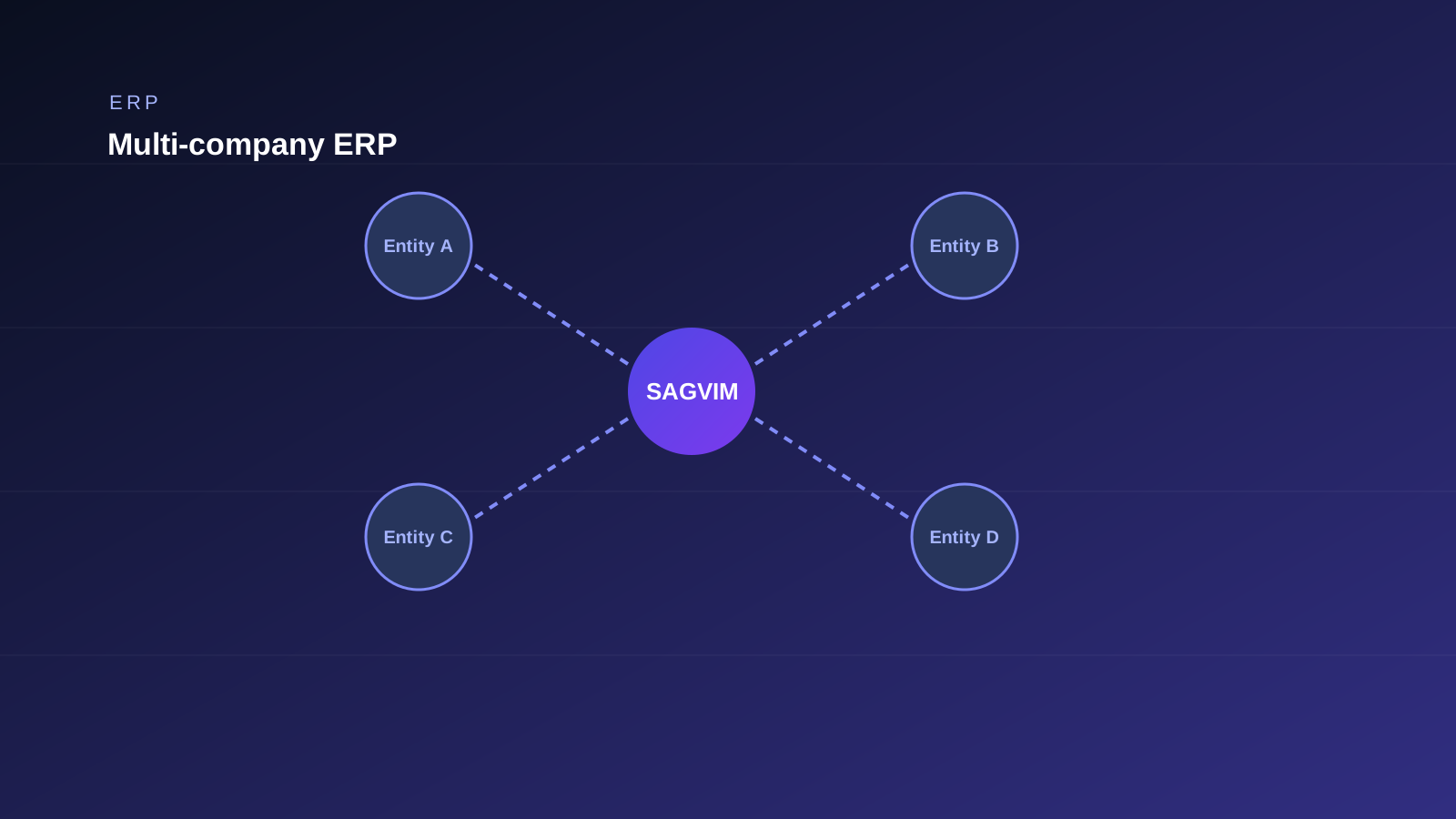
SAGLINKS ERP gives distributors shared visibility across inventory, purchasing, sales, and finance — multi-company support included for groups running several entities. If your teams are reconciling different versions of stock levels, a single platform is the highest-leverage fix available.